I have always been captivated by those Aussie travel books written in the 1950’s 60’s and early 70’s, in the days before the ‘outback’ was opened up for extensive mining and tourism. The authors of these books, modern day explorers, captivated the hearts of the majority, who at that time, were confined by their circumstances to live in the cities dotted round the coastline of Australia.
The stories that were written about the harsh and, at that time, relatively inaccessible interior of the continent, satiated the appetite of the city dweller for something, dangerous, adventurous, romantic, extraordinary. These books were an antidote to the 9 -5, the suburban barbecue and the manicured lawn.
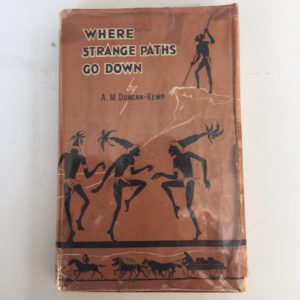
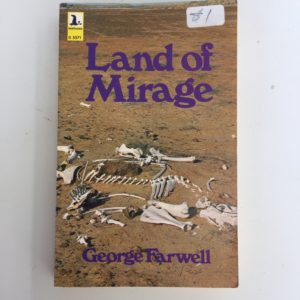
I have a small collection of these books with titles such as ‘Land of Mirage’, ‘Overland Telegraph’, ’Up the Track’, ‘I, The Aboriginal’ and, ‘Where Strange Paths Go Down’.
I recently purchased another extraordinary travel adventure story of this sort at a local second hand book store with the wonderfully enticing title, ‘Spinifex Walkabout’, ‘Hitch-hiking in Remote North Australia’. by Coralie and Leslie Rees.
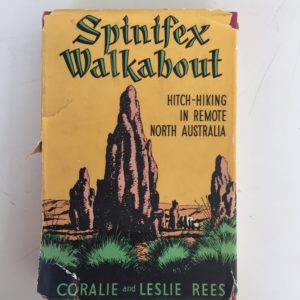
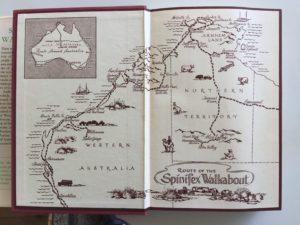
It was published in 1953 and as the title suggests it is the story of how this couple hitchhiked around the north of Australia commencing their journey on a big truck carrying general goods northwards from Geraldton in Western Australia. But not without first receiving a warning from the driver…
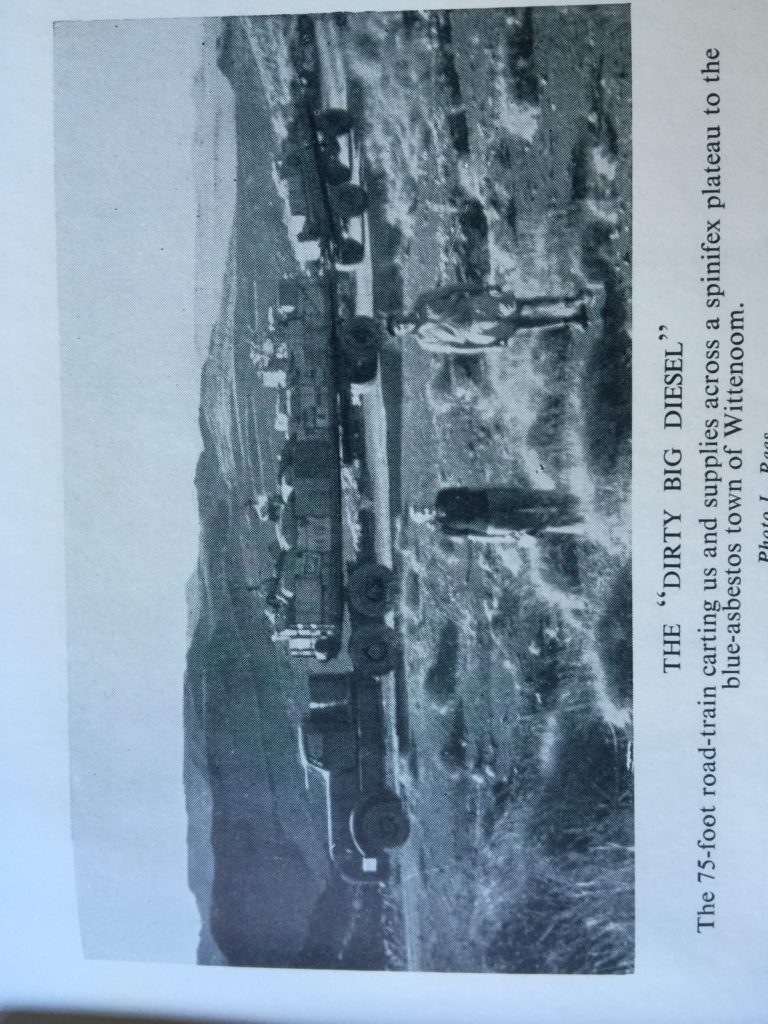
”the road’s as rough as-golly, it’s rough! It’s one of the bumpiest stretches of track in the Nor-west. Then there’s only one bucket seat in front with the driver. Pretty greasy and dusty. Your good man here would have to hang on behind, on top of metal pipes and oil drums. The truck moves all night, and remember its the middle of winter, and, by jingo, round about 3 a.m., the wind across those plains…brrrrrrrh”!
The journey began.
“For hours now we had been driving through big sheep stations, but saw no sign of any human habitation. The homesteads were in almost every case set miles back from the road. Boolathanna, Boologooroo, and Minilya-the native names of the areas now labelled the big properties. We saw few sheep. That afternoon in blazingly bountiful sunshine we crossed the Tropic of Capricorn. As the sun was setting we pulled up at Winning Pool, which consisted of a station homestead and a post-office.
The post office was just a room in a galvanised-iron and wood bungalow occupied by a telegraph linesman and his wife. He was twenty miles away, making sure there were no breaks in the telegraph- and telephone wires running north and south, but the wife was at home milking her goat and minding her four little children, plus the post-office and telephone switchboard.
It is easy to see how the folk in the crowded Australian cities would have loved to escape into one of these books and be enthralled by the tales of adventure from the mysterious ‘never never’ land that was so close but beyond their reach.
Personally, it makes me somewhat sad to read these books. They tell of adventures that can never really be had again. Then, the outback was the domain of a few brave and hardy souls, the tides of the city hoards were held at bay by discomfort, fear and awe.
Not so any more.
The levee’s have been breached by bitumen, Winbegos, 4×4’s, satellite phones and sat-navs. The remotest of places are now accessible in comfort. On our own road trip north to Cape York we rarely found ourselves on our own even though we traversed some of the remotest tracks in that region.
Even more distressing to me is that this flood of ‘civilisation’ has eroded away so many of the outback characters who regularly appear in the pages of these books and who are part and parcel of the story. They are rarely, if ever, replaced.
Australia is a different place now. Henry Lawson, in his day, lamented the passing of a world that was special, special because it was unseen but by a few, a world that was the making of great men and women and through them the making of great nations;
‘The world is narrow and ways are short, and our lives are dull and slow,
For little is new where the crowds resort, and less where the wanderers go;
Greater, or smaller, the same old things we see by the dull road-side —
And tired of all is the spirit that sings of the days when the world was wide.’
( ‘In the Days When the World was Wide’, by Henry Lawson)
More or less gone are the stories of heroics and adventure that made life bearable for ordinary folk, that drove them on and gave them a sense of being part of something bigger even though they themselves could not go where brave men and women went.
Everywhere in this beautiful country of ours is now accessible to anyone who cares to visit. As a result we have lost something special. An outback that is easily accessible, sanitised and air-conditioned has impoverished us. We have killed the goose that laid the golden egg.
‘Think of it all — of the life that is! Study your friends and foes!
Study the past! And answer this: ‘Are these times better than those’?
(In the Days When the World Was Wide)
Hi Dad – good post, I enjoyed that. I sympathise with the feeling of melancholy that reading some of these stories of exploration can bring – I get that too from time to time.
Something to think about – some might consider YOU one of the outback characters you refer to 😉
Xave
Thanks Xave..Good thought, I reckon I’ve got a bit of a way to go before I become one of those characters..I will have to become more eccentric as I get older and get into some more adventures!